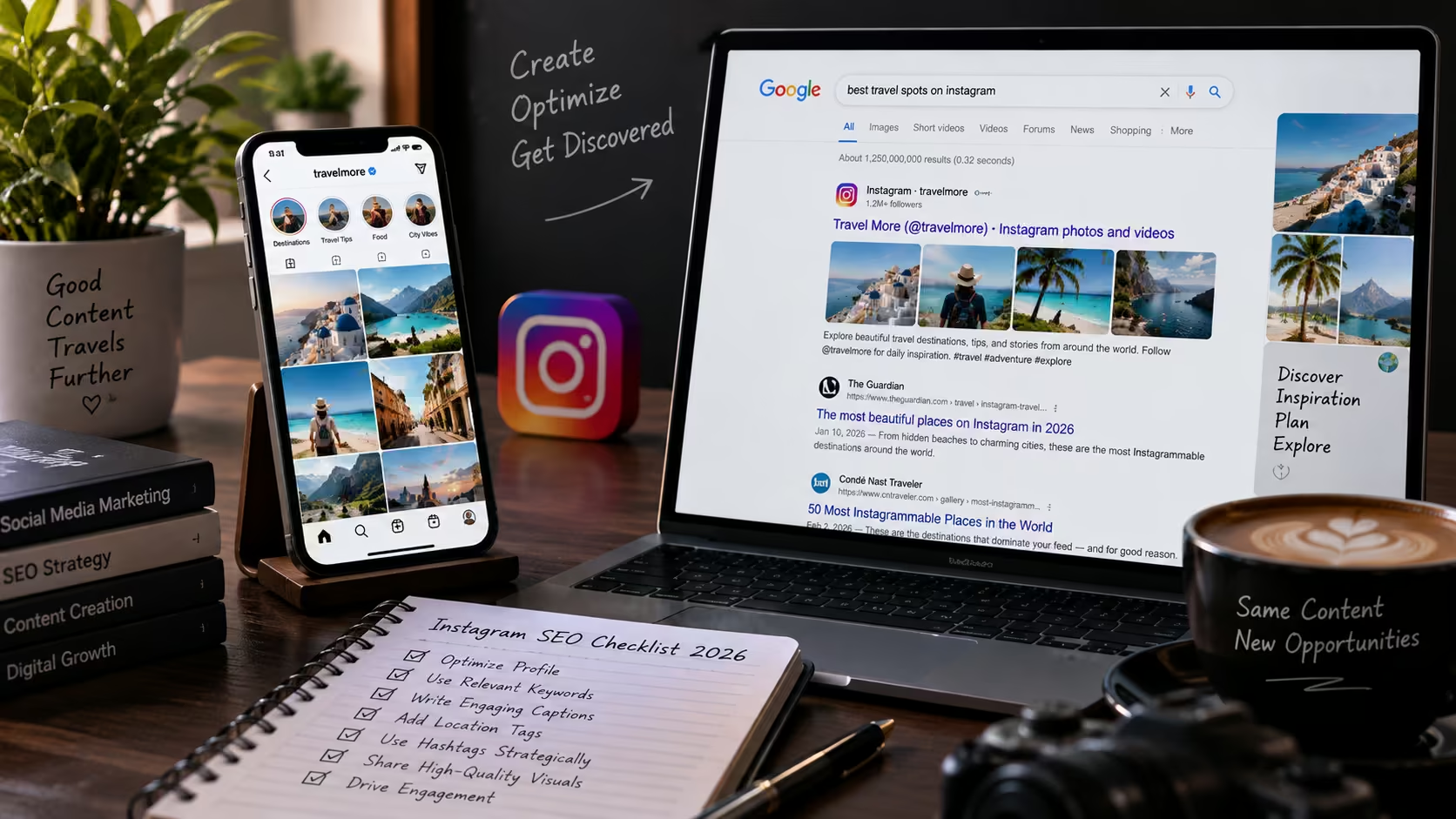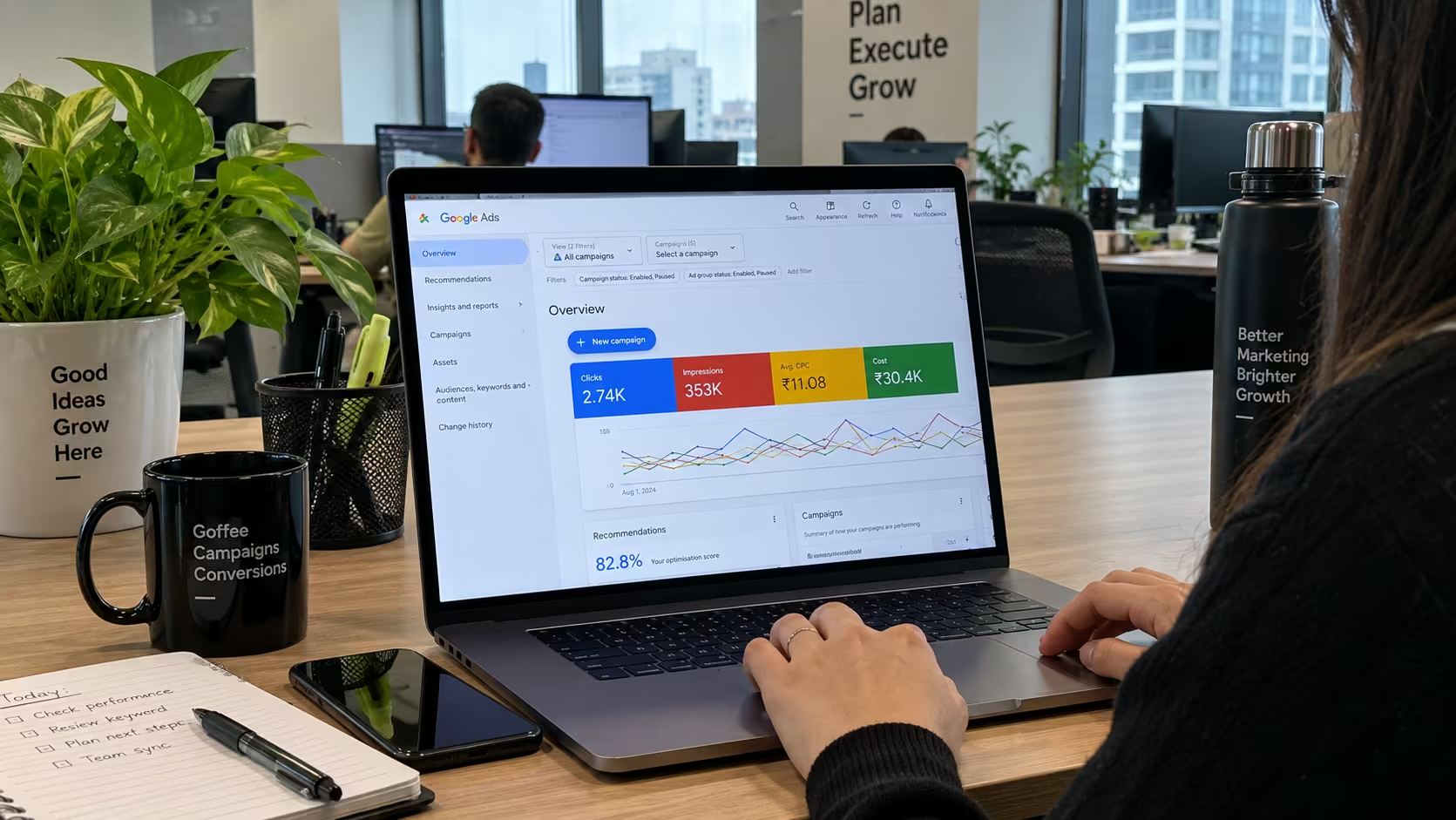






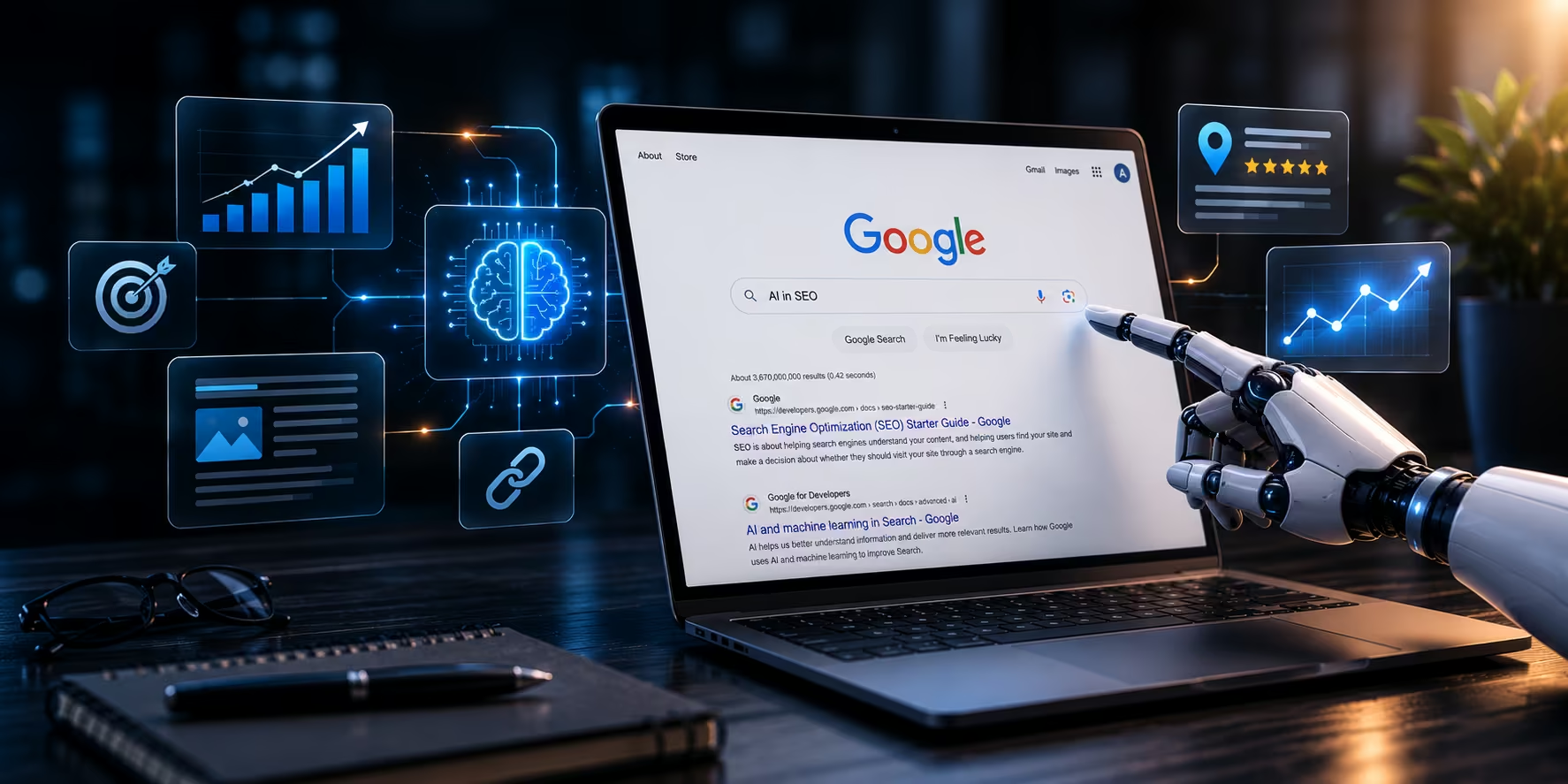
Ask Google a question today, and there’s a good chance you’ll get a complete answer before a single blue link even shows up. That’s Google’s AI Overview, and it’s quietly rewritten what “ranking #1” actually means.
If your rankings look fine but your traffic has been sliding anyway, this is probably why. It’s the trend our team at VR Web Studios has been keeping the closest eye on for clients lately, because it’s affecting almost everyone, just not in the same way.
What Is a Zero-Click Search?
A zero-click search is exactly what it sounds like: someone gets their answer right there on the results page and never clicks through to a website. This isn’t new—featured snippets and “People Also Ask” boxes have been doing this for years. What’s changed is the scale. Instead of pulling one snippet from one page, AI Overviews synthesize an answer from several sources into a single conversational response, and that’s made zero-click the norm rather than the exception.
The numbers back this up, even if the exact figure depends on who’s measuring it. SparkToro and Datos’ clickstream data puts the U.S. zero-click rate around 58–60%. Bain & Company’s February 2025 consumer research lands in a similar range and adds a striking detail: they found 80% of consumers now lean on AI-generated results for at least 40% of their searches. Other trackers, like Similarweb, report figures well above that. The methodologies differ, but the direction doesn’t—and the gap widens sharply once an AI Overview appears. Similarweb puts the zero-click rate for AI Overview queries around 83%, versus roughly 60% for searches without one.
Bottom line: showing up on page one isn’t the finish line anymore. Getting clicked is.
Which Businesses Feel It Most
The impact isn’t spread evenly:
| Impact level | Content types |
|---|---|
| Hit hardest | Content types like informational “how-to” guides, health and wellness topics, general research queries, and reference or encyclopedic material. |
| Moderately affected | News, recipes, blog-style educational content |
| Least affected | E-commerce with strong purchase intent, local service businesses, bookings, branded searches |
If your content strategy leans heavily on top-of-funnel “what is” or “how to” articles, this is where you’ll feel the steepest traffic decline even while your rankings hold steady.
It’s Not All Bad News
A few things are worth keeping in perspective:
- The clicks that remain convert better. Someone who clicks through after reading an AI Overview has already been pre-qualified—they wanted more depth, which tends to mean higher intent. Industry data from Ahrefs and others backs this up: fewer clicks overall, but meaningfully better conversion on the ones that survive.
- Branded, local, and transactional searches are holding up. If someone already knows your name or is ready to buy, they’re still coming to your site.
- Getting cited inside an AI Overview is visibility too. Seer Interactive’s research found brands cited inside AI Overviews earn noticeably more organic and paid clicks than brands that aren’t cited on the same query—even accounting for the overall click decline. Even without a click, your name and reputation are being reinforced right in front of the searcher.
What This Means for Your SEO Strategy
Traditional SEO isn’t dead, but it needs a companion strategy. Here’s where to focus:
-
Optimize for citations, not just rankings.
AI Overviews draw from content that’s clear, well-organized, and authoritative. Concise definitions, well-labeled steps, comparison tables, and direct answers near the top of a page are far more likely to get lifted into an AI-generated response. -
Double down on what still drives clicks.
Invest more heavily in local SEO, branded content, product/service pages, and bottom-of-funnel content where users are ready to act. These categories are the most click-resistant. -
Build genuine authority (E-E-A-T).
AI systems favor sources with demonstrated expertise and trustworthiness. Author bios, original data, case studies, and clear business credentials matter more than ever, not less. -
Track visibility, not just traffic.
Clicks and rankings no longer tell the full story. Start monitoring how often your brand shows up or gets mentioned inside AI Overviews and AI chat tools like ChatGPT, Perplexity, and Gemini. This is often called AEO or GEO (Answer/Generative Engine Optimization) and it’s fast becoming a metric worth reporting on its own. -
Make your content easy for AI to lift and cite.
Clear headers, scannable structure, direct answers in the first sentence or two of a section, and structured data (schema markup) all improve your odds of being the source an AI Overview pulls from.
The Bottom Line
AI Overviews haven’t killed SEO—they’ve changed what “winning” looks like. Ranking well is still important, but on its own, it’s no longer enough. The businesses that adapt now, building content for both human clicks and AI citations, will be the ones still visible when the rest of the web goes quiet.
At VR Web Studios, this is exactly the shift we help clients navigate—auditing where you stand today and building a strategy designed for how people (and AI) actually search now. If you’re not sure where your business stands, get in touch for an AI visibility audit.
FAQ
Q: What is a zero-click search?
A: It’s a search where the person gets their answer directly on Google’s results page through an AI Overview, featured snippet, or knowledge panel without clicking through to any website.
Q: Does a zero-click search mean my SEO isn’t working?
A: Not necessarily. Your rankings can be strong even as clicks decline, because AI Overviews are now answering a growing share of queries before anyone reaches the results list. The fix isn’t better rankings—it’s optimizing to get cited inside those AI answers, not just ranking below them.
Q: How can VR Web Studios help my business get cited in AI Overviews?
A: VR Web Studios audits your current content against what AI systems favor—clear structure, direct answers, comparison tables, schema markup, and demonstrated authority—then builds a strategy to close the gaps. Get in touch for an AI visibility audit to see exactly where you stand.